Why Every CEO Needs a Trusted Advisor Who Has Been in the Trenches
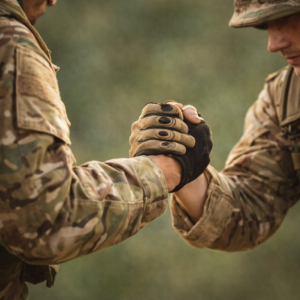
In the military, the battle buddy concept is non-negotiable. You never go anywhere alone. Your battle buddy is your trusted partner, the person who shares your risks, watches your blind spots, holds you accountable when it matters most, and tells you the truth when everyone else is telling you what you want to hear.
I spent 33 years in the Army, commanding at every level from platoon to the 7th Infantry Division. In every one of those assignments, the battle buddy principle was woven into the fabric of how we operated. Not because the Army mandated it on paper, but because leaders who had been in difficult situations knew what happened when someone had to navigate those situations alone. The cost was too high.
When I retired and transitioned into the corporate world, I expected to find something similar. What I found instead stopped me cold.
The Vacuum at the Top
Most CEOs and senior executives I have worked with over the past two decades operate in a kind of structured isolation. They have staffs. They have boards. They have direct reports who respect them and, in many cases, genuinely care about them. But they do not have a battle buddy.
And that absence matters more than most of them realize.
The higher you climb in an organization, the more carefully people manage what they tell you. Your direct reports are invested in how you perceive them. Your board is invested in outcomes. Your peers are navigating their own agendas. All of this is human and understandable. But it means that the person carrying the greatest weight in the organization is often the person receiving the least unfiltered information about the actual state of things.
I have sat across from senior leaders who had not had a genuinely honest conversation about their organization in years. Not because the people around them were dishonest, but because the culture had made honesty toward the top quietly risky. In a Culture of Compliance, people learn quickly what the boss wants to hear. And so that is what the boss hears.
The result is a vacuum at the top, where the leader is making consequential decisions based on information that has been softened, filtered, and shaped by the time it reaches them. That is a dangerous place to lead from.
What a Battle Buddy Actually Does
A genuine trusted advisor in the boardroom is not a coach in the conventional sense, though coaching is part of it. It is not a consultant, though strategic thinking is part of it. It is something closer to what the battle buddy relationship is in the field: a person who is fully invested in your success, has no competing agenda, and is willing to tell you what they actually see.
In my work with executive teams through Level Five Associates, I have found that the most valuable thing I can offer a senior leader is often the simplest: an honest read of what is happening in their organization that they cannot get from inside it. I have watched leaders discover that what they believed about their culture was significantly different from what their people were experiencing. I have watched those same leaders, once they had that honest picture, make decisions that transformed their organizations.
The battle buddy does not fix the problem. The leader fixes the problem. But the battle buddy makes it possible to see it clearly.
The Connection to Set the Azimuth
One of the Big 6 Leadership Principles I teach is Set the Azimuth: establishing the Mission, Intent, Values, and Culture of the organization in writing, communicating it consistently, and returning to it as the cardinal direction whenever the environment shifts. It is the foundational act of Adaptive Leadership.
But here is what I have observed in practice. Leaders who are operating in isolation tend to drift from their own azimuth without realizing it. The pressure of the market, the noise of the day-to-day, the weight of decisions made under uncertainty, all of it accumulates. And without someone outside the immediate environment who can say “You’re off course,” the drift continues until the gap between where the leader intended to go and where the organization is actually headed becomes significant enough to cause real damage.
A battle buddy in the boardroom is, in part, an azimuth check. Someone who knows where you are trying to go, watches how you are actually leading, and is willing to close the gap between the two when they see it opening.
What to Look For
Not every advisor, mentor, or coach fills this role. The battle buddy relationship has specific qualities that make it work.
The person needs to have been in the trenches. Robert’s audience of manufacturing CEOs and senior leaders is deeply skeptical of theory without application, and rightly so. A battle buddy who has never led an organization through difficulty cannot give you the kind of counsel that comes from having made hard decisions under real pressure. Credibility in this relationship is earned through experience, not credentials.
The person needs to listen to understand, not to fix. The instinct of most advisors is to move quickly to solutions. A genuine battle buddy resists that instinct long enough to make sure they actually understand what is happening before they offer perspective. The most valuable thing I do in many of my conversations with senior leaders is ask questions and then stay quiet long enough for the real answer to emerge.
The person needs to have no stake in your answer. This is perhaps the most important quality and the hardest to find inside any organization. The people who work for you need you to be confident. A battle buddy needs you to be honest.
The Journey Continues
Building a Level Five Culture of Commitment requires a leader who can see their organization clearly, Set the Azimuth with conviction, and hold that direction through the turbulence that is the reality of leading in today’s environment. None of that is possible if the leader at the top is operating without honest counsel.
The military figured this out a long time ago. You do not go into difficult terrain alone. You bring someone who has your back, who will tell you when you are about to step into something you cannot see, and who is invested enough in the mission to have that conversation even when it is uncomfortable.
The most effective leaders I have worked with in the corporate world have found that person. The ones who are still struggling, more often than not, have not.
If this resonates with you, I explore these ideas in depth in my recent conversation with Jeremy Blain on the Rethinking Leadership podcast. You can listen to the full conversation HERE.
Enjoy the journey!